08 September, 2015

5 Stolen Recipes to Do and Become

A recipe has no soul, You as the cook, must bring soul to the recipe.” - Thomas Keller, chef, writer, restaurateur.

Every artist gets asked the question, "Where do you get your ideas?" The honest artist answers, "I steal them."
Here are a 5 stolen life recipes to which I have added my soul (aka my learning spin) to;
1. Adapt to the times
Restaurateurs today, realising that food is not the only carrot drawing diners in are giving more emphasis to the design and giving their places a makeover. Attention is being paid to the decor, layout, music. lighting, the clean fragrance (of herbs or fresh coffee and bread or wood charring in a clay oven) comely staff. All of which come together very nicely to pull in the customers. Ultimately however, as Chef Solomon says, as good as the decor maybe, it will be the food which will pull in the customer.  

Know when to focus on targets, when to pay attention to emotions and when to focus on the changing needs of customers. Be sensitive to the ecosystem and respond accordingly, taking care to never forget your essence.

2. Connect to the environment
When we think of the word 'food', we only think of nutrition, says chef Pankaj Walia. But the truth is our connection with food is deep and spiritual; something that our ancestors realised and respected. Archaeology professor Dr Kurush Dalal recommends slow cooking to establish the connection. Slow cooking, he says, recognises the connection between plate, people, planet and culture; things we have forgotten to correlate these days while munching on fast food."

People, planet and culture - each, some, or all three, are integral to our every action. Recognising the connection between our actions and their impact on the three, can help us become more conscious and connected to our environment.

 3. Connect to the Universe
“You’ll find a sense of calm overtaking you as soon as you pray or sprinkle water around your food before your meal," says Prof. Kurush Dalal. That time - even if it is for a split second - makes you appreciate the world, its wonders and the food on your table. It connects you with the Universe.”

Ritual or ceremony is a celebration, a tradition. Through these rites we re-live, re-enact, honor, remember, and call forth ancient spiritual teachings, tradition and divine spirits. Studies show that they are good for people’s physical and mental well-being. They help make life seem predictable, under control, and meaningful.

4. Have a hobby
Money isn't  the only thing stock market man Ramesh Damani kneads. He has a thing for dough which made him seek out baking and attend a week's bakery course in Paris. Asked for the similarity between brokers and bakers, Damani's reply is, "Both like the feel of dough....and both (investment and baking) need a lot of patience."

A hobby is an echo of the soul, and if you are following your heart, so can be your profession. Seek answers within, discover the parts between your profession and your hobbies which are similar, or support the other.

6. Play your cards wisely
"I realised my face was never going to be my fortune," says  Prahlad Kakkar, ad guru. "(So) I decided to impress ladies by tickling their palate - good food, full-bodied wine, candlelight and my storytelling powers are a lethal combination.  It has always worked. Food is much more than fuel for your body."

Remember what Randy Pausch said, "we cannot change the cards we are dealt with, just how we play the hand."

CALL TO ACTION
Now that you have a bunch of recipes to choose from, make your choice, put the ingredients of your choice into the pot, marinate in a thick sauce of motivation for a few days. Then light the fire of your passion, stir in a good dose of determination and serve. 

Bon Apetit!


07 September, 2015

Buzz Off Buzz Words!

Carter Murray, the CEO of ad agency FCB, makes for an unusual CEO.  He hates buzzwords. Something that many of his contemporaries appear to find comfort and meaning in.  Murray calls them "completely wanky, corporate rubbish speak." He can't stand the stuff. Asked how he gets by as CEO with such distaste for industry jargon,  Murray says,  "We are in the business of understanding people and advising clients on how to connect with them. I find it strange that we hide behind the corporate lingo."

#Reflect
Am I a jargon buster or a Jargon Morgan?

05 September, 2015

Values Based Leadership

Narayan Murthy,  when asked what management ideas influenced him on his journey with Infosys, replied that more than management ideas, he "set store in values:fairness,accountability, transparency. The rest then fall into place." Citing an instance of fairness, which says you have to provide equal opportunity, he says he once had four women direct reports - an instance of diversity,  which flourishes in such an environment.

Call to #action
Which of my values are reflected in my leadership?

04 September, 2015

Leap From The Comfort Zone

A king received a gift of two magnificent falcons and called in his head falconer to train them. Some months later the head falconer informed the king that though one of the falcons was flying, the other had not moved from its branch since the day it had arrived. The king summoned the best healers and sorcerers and healers to tend to the falcon, but no one could make the bird fly. Having tried everything else, the king decided to call in someone familiar with the countryside - a farmer. In the morning, the king was thrilled to see the falcon soaring high in the sky. He immediately ordered his courtiers to bring him the doer of this miracle. When the farmer arrived,  the king asked him, "How did you make the falcon fly?" " It was very easy, your highness, the farmer replied  I simply cut the branch of the tree where the bird was sitting."

#My Learning
I am most comfortable in my comfort zones because within it, I can operate with certainty and least risk. Can I take the leap?

03 September, 2015

Wise Leadership

In the week in August that saw more than $1 trillion wiped out from the Asian markets making people around the world jittery, a memo went out from the CEO of Starbucks Howard Schultz. The email to his employees urging them to be more sensitive to anxious customers, said,"Today's financial market volatility, combined with great uncertainty both at and abroad,  will undoubtedly have an effect on consumer confidence and perhaps even or customers'attitudes and behavior...Let's be very sensitive to the pressures our customers may be feeling, and do everything we can to individually and collectively exceed their expectations."

Wise leaders care for the needs and feelings of their people and customers. Their sensitivity makes them to respond at the right time and in the right way. In turn, people and customers return their gratitude, by helping wise leaders make their enterprise a success.

02 September, 2015

Leading Under Pressure

"It is harder to lead when you are not scoring runs but that is when your character and fighting qualities as a leader come out. " - Brendon McCullum, New Zealand skipper on leading from the front.

01 September, 2015

Play Your Cards Right

I realised my face was never going to be my fortune,  I decided to impress ladies by tickling their palate - good food, full-bodied wine, candlelight and my storytelling powers are a lethal combination.  It has always worked. - Prahlad Kakkar, ad guru.

#MyLearning
Reminded of what Randy Pausch said, "we cannot change the cards we are dealt with, just how we play the hand."

30 August, 2015

9 Thoughts to Craft The Leader In You

Though much of the art and science of leadership remains unchanged over time, it needs to be crafted to suit the needs of the current environment. The following stories of contemporary leaders and views of leadership gurus, should give you food for thought to craft your individual leadership style and craft it to suit your time and context.. 

1.Reinvent Yourself  
"Companies fail or are successful because they either get or miss market transitions", says John Chambers, CEO and Chairman of Cisco. ..."What Cisco has done is that we compete on market transitions, not against competitors...We have reinvented ourselves five times"
Reinventing is not a necessary evil to be undertaken to undertake to survive. Being inquisitive - a hankering to learn new things, can lead to seeing the world of work as an opportunity and make it easier to adapt - a quality essential in the present times.

2 Give your people permission to fail
"One of the saddest things that happen with creativity...I think sometimes it isn't expressed because of fear," says Snapchat CEO Evan Spiegel. "Everyone is born very very creative. But at some point it can be scary to do something new." To overcome this fear, Snapchat encourages the idea of 'failing fast', since it's better that those failures happen in private before being released on users.

3.Play for Win-Win
Unlike Steve Ballmer, Satya Nadella is clear that times have changed and he is taking tough decisions. For him,  competition is not a zero sum game. Just because Android wins does not mean Microsoft loses.  If Android wins great. I'll also put Office 365 on Android so it can be a win - win,  it doesn't have to be a win - lose.

3. Make the right life choices
"There is nothing like work-life balance, there is only one life", believes Padmasree Warrior, former CTSO of Cisco. Bhaskar Pramanik, Chairman Of Microsoft India, agrees with her wholeheartedly. "You live life the way you want it. Life is about choices," he say

4.Practice brevity in communication
A Microsoft research reports that the average person's attention span is just 8 seconds, a second less than that of a goldfish.  For humans it used to be 12 seconds in 2000. Abundant reason why CEOs and you and me, need to communicate well internally and externally in the most effective manner.

5. Surround yourself with the best people
Leslie Gaines-Ross, Chief Reputation Strategist usually gets involved worn CEOS in their first 100 days  that they  build up their credibility quickly. And this what she tells them, in that order - listen to customers, surround yourself with the best senior management and communicate with the board.

6. Make your knowledge 'future ready'
"Half-life of knowledge is getting shorter and shorter with new breakthrough technologies and discoveries," says Management Guru Jagdish Seth, Management guru.."Therefore old perspectives and evidence are no longer relevant.We need to develop or discover new perspectives which are suitable for tomorrow's world"

7. Tailor your communication to the audience
Mythologist Devdutt Pattanaik explains how in the Gita, there is a three way communication between Krishna the speaker, and three receivers; Arjuna, the seeker of knowledge, Sanjay the transmitter of the knowledge  and Dhritirashtra, who is eager to know only the fate of his sons. This, Devdutt observes, is aimed to draw attention to the complexity of any communication. Are people around you interested in what you are saying (Arjuna),  are they merely memorising (Sanjay), or are they just disinterested or even suspicious (Dhritirashtra)? 
Tailor your communication accordingly.

8. Be Considerate of your people
On his last journey from Guwahati to Shillong for a speaking engagement, the late president's car was being escorted in front by three soldiers travelling in a Gypsy. Seeing one of them standing throughout the journey, Kalam repeatedly asked his aide to request him to sit down, but his aide was not able to get him on the phone. At the end of the journey, Kalam invited the soldier to his room, shook hands with him, thanked him and enquired whether he had eaten.


9. Appreciate - Motivate
Debutant Actress Ruhi Singh says, "When you enter the sets of (film director) Madhur Bhandarkar's film, you hear words like 'jalwa' (charisma/luster/ splendor) and 'aag laga de' (be on fire) which is a driving force for us. I had to shoot a waterfall sequence in the night, and it was freezing cold. But I could only do it because (Madhur) makes sure everyone feels comfortable before filming." 


Call To Action
Time to craft your own leadership recipe? Set the fire going!

27 August, 2015

Saying it like it could be!

In his autobiography restaurateur Vithal Kamat describes strategies he used to attract customers to his newly started Udupi restaurant. Lining up his friend’s cars outside his restaurants - many of them also sitting inside as dummy customers to create a perception of a busy restaurant. Wafting smell of fresh ground coffee and food in the restaurant to titillate and tempt customers. All strategies to create the perception of the amazing experience waiting for customers inside.

#Viewpoint
Greg Creed, CEO Yumi Brands says, "you can market to love and hate,  you cannot market to indifference.

26 August, 2015

Communicate to Motivate

Debutant Actress Ruhi Singh says, "When you enter the sets of (film director) Madhur Bhandarkar's film, you hear words like 'jalwa' (charisma/luster/ splendor) and 'aag laga de' (be on fire) which is a driving force for us. I had to shoot a waterfall sequence in the night, and it was freezing cold. But I could only do it because (Madhur) makes sure everyone feels comfortable before filming. "

#Viewpoint
Good leaders communicate to #motivate. They channelise the desire and energy of their people to achieve things they know must be done for mutual success.

25 August, 2015

1+5 Ways to Be The Complete Hu(Man)

The advertisement of a well-known suiting and shirting company assures us that wearing garments made from their fabrics will make you 'the complete man'. But completeness is not complete by only wearing smart clothes. Clothes, and something more go into making the complete (hu) man.

The 5 stories I have gathered suggest some ways of going about making ourselves more complete.

1. Invoke the Universal Power
When Saurabh Kochhar of Foodpanda approached mentor Praveen Sinha in putting putting together a business plan, the latter's advice was ' epic '. He suggested that after creating a business plan, scale it down by 20 %. Consider it " God's share, " for hoping things go well, said Sinha. 

2. Have a healthy ego
"My profession demands that unless I bury conceit, I will not be able perform," says actor Kay Kay Menon. "Today people seem to prioritise ego and call it acting.
The film industry is just a part of my life, I have other interests like sports and reading. I try to understand the inner me and not bother much about the superficial me," 

3.Keep an open mind
An open mind and a willingness to expose oneself to new experiences, new ideas and new people is the fuel of creativity. When he painted ‘Femme D’Algiers”, Picasso took visual information and emotional understanding of his life experiences and transformed them into something unique and unexpected. His creation is now the most valuable painting in history. 
Creativity transforms information into more insight, a better picture of our world, and therefore a more solid foundation on which to build bigger, better ideas.

4. Starve your doubts
When he first approached his boss at Kuoni India, with the idea of offering visa processing services to the American embassy in 2001, Zubin Karkaria met with understandable skepticism. Their was the toughest visa regime, with more processes and documentation than any other country. But Kuoni had nothing to lose in letting Karkaria try, and when he did submit the proposal - the Americans said yes! Today, the visa services operation has turned into a global money spinner. 

5. Maximize your mind’s potential
“Your mind is like a sponge, and less filled it is with muck, the greater the capacity of it to absorb water,” Says Ajit Doval, National Security Advisor. “Keep your mind out of petty jealousies like who is doing what and who is talking about what. You are taking away the tremendous capacity of your mind. You don’t know how much talent and energy it is sucking out of you.” 

Call to Action
The said suiting company also offers bespoke tailoring at its showrooms. You might want to tailor some of the above strategies to suit you. Do share your efforts with us.

Goal Alignment

Lenovo's roots have been as an enterprise focused B2B business. But now, with growth happening more in the smartphone space than in the PC space, they have realised that if you have a B2B mindset and B2B structure, you cannot succeed in the B2C space. To give itself a youthful look, Lenovo's formal dress code, reserved parking space and cabins for senior managers have been done away with,  All senior managers have also been asked to be on Twitter to get a better understanding on how millennials think.

#MyLearning
For success in  work and life, align what you have with what you want.

24 August, 2015

Adapt or Perish

Restaurateurs today, realising that food is not the only carrot drawing diners in are giving more emphasis to the design and giving their places a makeover. Attention is being paid to the decor, layout, music. lighting, the clean fragrance (of herbs or fresh coffee and bread or wood charring in a clay oven) comely staff. All of which come together very nicely to pull in the customers.

#MyLearning
Adaptability is one quality that is key to success.  Know when to focus on targets, when to pay attention to emotions and when to focus on the changing needs of customers. Being sensitive to the ecosystem and responding as per need the need of the time is the essence of adaptivity.

22 August, 2015

Starve your doubts. Believe

When he first approached his boss at Kuoni India, with the idea of offering visa processing services to the American embassy in 2001, Zubin Karkaria met with understandable skepticism. Theirs was the toughest visa regime, with more processes and documentation than any other country. But Kuoni had nothing to lose in letting Karkaria  try, and when he did submit the proposal - the Americans said yes! Today, the visa services operation has turned into a global money spinner. It has captured 50% share of the market and contributes to 60% of Kuoni’s FY14 profits.

21 August, 2015

Share Offering

When Saurabh Kochhar of Foodpanda approached mentor Praveen Sinha to put together a business plan, the latter's advice was 'epic'. He suggested that after creating a business plan, scale it down by 20%. Consider it "God's share," for hoping things go well, said Sinha.

20 August, 2015

The Data Continuum

The seemingly unlimited data available to us nowadays, seduces easily into an illusion of certainty and objectivity, says Jason Gonsalves, MD, BBH London. But ultimately, data will only provide a description of what has happened. Not what will. The alternative is to look at the available data and come to an original conclusion, or imagine a new application or action from the data. Data is the fuel of creativity. Creative execution and constant reflection on the learning becomes wisdom.

19 August, 2015

5 Ways to Never Give Up

What do you do when a project you have invested everything on - your blood, sweat, tears, mind and heart - proves to be a failure? Why, just get up, dust yourself and get going again, of course! Here are five stories I have gathered of how some people did it. 
1. Take pride in past success
Dustin Brown ranked 102, on beating Rafael Nadal at Wimbledon, but losing his very next match to Viktor Troicki. 
"It doesn't matter if I lost or not, no will ever be able to take that (beating Nadal) away from me."

2. Respect failure
Howard Schultz after a major setback at Starbucks.
"Celebrate failure, learn from the failures, and not hide from mistakes". He also spoke of the bottle of Mazagran, a coffee drink he helped launch in the 90's. It proved be a spectacular failure. He now keeps a bottle of the drink on his table, to remind him to do a reality check on his success when he's up, and equally - never give up, when he's down. 

3. Reconnect with your passion.
Filmmaker Deepa Mehta on the failure of her film 
'Monsoon' at the box office. 
She remembered her father, who, when told about her decision to take up filmmaking, had encouraged her, but cautioned her about life's unknowns, "You make a film because you have incredible passion and because you want to tell a story. If it does well, good. But if it doesn't, you can't do anything about it, but you've had the satisfaction of doing something honest." 

4. Reframe strategy
Satya Nadella on how he handles the failure of the Windows OS for mobile phones. 
Competition for him, is not a zero sum game. He believes, "Just because Android wins does not mean Microsoft loses. If Android wins great. I'll also put Office 365 on Android so it can be a win - win, it doesn't have to be a win - lose."

5. Keep the spirit
After Edmund Hillary's great, but failed attempt, at scaling Mount Everest in 1952.
Though he regarded himself a failure. He did not however, lose his spirit. At a function organized to recognize the attempt, people greeted him with thunderous applause. Hillary, walked onto the stage, balled a fist at the picture of the mountain and said, "You beat me the first time, but I’ll beat you the next time, because you’ve grown all you are going to grow… but I’m still growing."  

He beat Everest on 29th May 1953.

11 August, 2015

Two Worlds One Life

"There is nothing like work-life balance, there is only one life" - Padmasree Warrior
As more and more people work 24x7, thanks to the internet and smart devices, the lines between professional and personal, work and life get blurred. And without our being aware of it,  the professional and the work side creep up  to overtake the personal and life side. It becomes one life.

This truth hit Umang Bedi (UB) MD Adobe India, when he met Harvard Professor Clayton M Christensen(CC),
who asked him three questions;
CC: "What is the most important thing in your life?" 
UB: "My family".

CC: "How much time do you spend with them not watching a screen or discussing logistics?"
UB: "Maybe 10 minutes a day,"

CC: "How much time in the 60 minutes a week do you spend with your most important priority in life, not giving them an instruction or criticising?"
UB: "Half the time."

"Is your family, really your biggest priority,” asked Christensen, “or are you making it sound good?" Bedi was shaken - he had been fooling himself along!

Call to Action
In the mad race to get ahead in our business or career, we begin to attach our values, our purpose and identity, to our work and achievements. All the while fooling ourselves into thinking that the family means much to us.

“You live life the way you want it. Life is about choices," says Bhaskar Pramanik, Chairman of Microsoft India.

Are you making the right choices?

Read a HBR article on making work-life choices:
https://hbr.org/2014/03/manage-your-work-manage-your-life.

08 August, 2015

Back to Your Roots

"Understanding where you are from help you better understand where you want to go."
                          - US Ambassador to India Richard Verma, describing his recent visit to his hometown in Punjab. 

07 August, 2015

Be Mindful not Mind Full

“Your mind is like a sponge, and less filled it is with muck, the greater the capacity of it to absorb water. Keep your mind out of petty jealousies like who is doing what and who is talking about what. You are taking away the tremendous capacity of your mind. You don’t know how much talent and energy it is sucking out of you.” Ajit Doval, National Security Advisor.

04 August, 2015

The Awareness Framework


Awareness precedes choice and choice precedes results. - Robin Sharma

When Paul O'Neill arrived as CEO at Alcoa, he didn't hold his troops to criteria that CEOs commonly use, such as profit margins, sales growth rates, or share appreciation. His singular standard: time lost to employee injuries. By focusing on just one  highly impactful habit, O’Neill managed to create change at different levels of awareness within the organization, the company's annual net income went up by five times and its market capitalization rose by $27 billion.

The Awareness Framework can help us understand the deeper and wide ranging implications of the focus on safety:

1. Task Awareness: Empowered employees began to offer suggestions and accidents were immediately brought to the attention of executives. As a result, the accident rate declined — ultimately to about 5% of the national average.

2. Situational Awareness:  Workers realizing that the management was keen to examine and improve every inefficient and dangerous manufacturing process, increased  communication among employees. Line workers offered suggestions to improve efficiency, and the company underwent a renaissance.

3. Emergent Awareness: Employees started recommending business improvements that otherwise would have remained out of sight. One day, a low-level employee made a suggestion that quickly worked its way to the general manager. Within a year, profits on the product doubled. By creating patterns of better communication, a chain reaction started that lifted profits.

4.  Self Awareness:  ''Paul came in and got us to do things we never thought we could do,'' says L. Richard Milner, head of Alcoa's automotive unit. The safety habit influenced every part of the employees’ lives - how they worked, ate, played, lived, spent, and communicated. Employees’ thoughts, feelings and  beliefs and their attitudes and reactions to changes in the environment improved. Their attitudes to people around  having a different point of view also took a turn for the better. Hard-core, ladder-climbing, capitalist executives turned into soft, feel-good samaritans, adept at identifying, co-opting, and shaping behavior patterns to increase profits.

By creating awareness around safety, O'Neill unleashed a pattern with the power to start a chain reaction. A reaction that improved a host of processes in the organization, created a employee-friendly environment, aligned people to the company’s goals and increased profits.

------------------------------------×---------------------------------

Want a Business coach to clarify/create/action the awareness process?
Contact Coach Uday

Living mindfully

When we think of the word 'food', we only think of nutrition, says chef Pankaj Walia. But the truth is our connection with food is deep and spiritual; something that our ancestors realised and respected. Archaeology professor Dr Kurush Dalal recommends slow cooking to establish the connection. Slow cooking, he says, recognises the connection between plate, people, planet and culture; things we have forgotten to correlate these days while munching on fast food.

#Viewpoint
People, planet and culture - each, some, or all three, are integral to our every action. Recognising the impact of our actions on the three, can help us become more mindful citizens.

03 August, 2015

The Healthy Sceptic

Before Isaac Newton came on the scene, people believed that the rainbow comprises of three colours;  red, blue and yellow. Through his famous prism experiment, Newton demonstrated that color is intrinsic to light. He also divided the spectrum into seven colours giving us ROYGBIV.  We now know that the spectrum consists of more than just those seven colours. Turns out, there wasn’t any particular scientific reason he chose the number seven, it was just his idosyncracy; he  thought it made more sense that way!

#Viewpoint
In these days of dependence on Google for research and knowledge seeking, and stories going instantly viral, it makes sense to recollect what the Buddha said more than 2500 years ago.

18 July, 2015

Celebrate Failure

To "celebrate failure, learn from the failures, and not hide from mistakes," says Howard Schultz, chairman and CEO of Starbucks....
Read on
http://eepurl.com/btoWIb

19 June, 2015

How to be reborn

Kishore Biyani with his Big Bazaar and Pantaloons (now with Aditya Birla Group) was a first mover in big format organized retail. Now he is seriously exploring to practice being 'Reborn'. Biyani's theme of Reborn essentially is about the need for an organization to reinvent itself....
Read on...
http://eepurl.com/bqPazr

30 May, 2015

Leaving a legacy

Tulsi Tanti's Suzlon, was in deep in debt due to unfavourable local policy changes and impact of the global slowdown. Hamstrung by a lack of funds, Tanti had to sell off his prize, profit-making acquisitions to fund the revival. Talking of the challenges of bringing the company back from the precipice, Tanti says being a mechanical engineer, he had always focused on technology and growth and did not have the core competency to do liability management. In difficult times, he had to go meet bankers and give stakeholders the confidence that there was light at the end of the tunnel. So the last five years, he says, were a completely alien aspect to his management.

Work and Life Lessons
So what could have given Tanti the strength to move away from his comfort zone of focusing on technology and growth, and persevere with what he wasn't happy doing? The answer may lie in his purpose - to build a company not for the next 10 years, but for the next 100 years.

Each of us wants to leave a legacy, a contribution to his or her community or society. Once articulated, the nature of the legacy leads us to do things which will outlast us.

What's yours?

26 May, 2015

Living our values

A 22 year old heir to a large infrastructure company believes luxury lies in work and relationships, not materialism. "Unity of family, companionship of friends, and faith in God..."  are the luxuries, he believes one should truly strive for. "More than anything," he continues, "I like to meet new people and learn about their viewpoints. That's like a luxury to me."

The three luxuries the young man talks of, reflect his personal core values. Values are the practices we use (or should be using) every day in everything we do.


They form the foundation on which we perform work and conduct ourselves. In an ever-changing world, core values are constant.  Core values are not descriptions of the work we do or the strategies we employ to accomplish our life purpose, our Dharma.  They  underlie our work, how interact with each other, and which strategies we employ to fulfill it.


Reference: ET Panache

Picture source: everyoneagreeswithtom.com

25 May, 2015

Making life changes

'Amazing transformation' of Rahul Gandhi, says Omar Abdullah,  referring to the change in Rahul after his 56 day sabbatical. He doesn't know where Rahul went, what he did, or what this transformation is down to.  But, says Omar, he would try to learn, because there were lessons to be learnt for himself as well.
He also hopes that it doesn't mean he has  to disappear for 56 days.
Life Lesson
The first step in our learning,  development and growth is to know what it is we want to learn. Though the last of Omar's comment may have been half in jest, it is a useful pointer to an understanding that in our desire to learn and grow, we may not necessarily follow the exact steps and process our inspiration may have followed. 
A useful process for change is to develop a foundational theme around which we want to grow our competence.  The foundational theme serves as a core around which we can weave our everyday experiences of listening, understanding, talking, writing and reading. The themes make learning holistic, and help to tailor the lessons to suit our needs and personality.

Some of the themes  could be;
Courage/Fear
When you have unrealized dreams, but hesitate to go after them in the fear of disrupting what you already have.

Habits
This one can be used when you are disorganized and seriously wishesto put your life in order and want to get rid of dis-empowering habits.

Personal Excellence
This one helps when you wish to improve the overall quality of your life and not just in a few specific areas.

What do you think Omar Abdullah foundational theme could be?

What's yours?

24 May, 2015

The true climber

"For the true climber, the story and the experience, exemplified by the way you go up the mountain, is more important than getting to the summit,” says 

Conrad Anker, an American mountaineer who has climbed Everest. “For commercial expeditions, it’s more about getting to the summit.”

And therein also lies the difference between aspiration and ambition, happiness and unhappiness, peace of mind and a life of stress.

What kind of a doer are you?

When it comes to doing, people are of three types; 
The Con doers: They think and analyse till paralysis come. Their actions remain in that state and they con themselves into thinking they are busy. 


The Can doers: These approach their tasks with enthusiasm and are focused more on the story, the experience and the process of doing. 


And finally, there are the
Do errs; They too approach their tasks with enthusiasm, but sweat the small stuff. They worry about whether they did the right things the right way. Once the task is over, they worry whether their actions will produce the right outcomes.

Where do you see the possibility?

21 May, 2015

Acting In Wisdom

Life, says Amit Varma in his column in the ET Panache, is a positive-sum-game. It is not only when you do an action that you benefit from it, but you also benefit when others do too. For instance, when two people transact a business deal, they do so because both gain value from it. When lovers kiss, the net happiness of both goes up.

Could this be true all of the time? Is it a rather idealistic way of  looking at life? Or, is it that, to have this belief, one needs to be the kind of wise person whose undertakings, the Bhagavad Gita says, "are free from desire and thoughts of the world, and whose actions are burnt up by the fire of wisdom?" 4(19).

 And how easy or difficult is it easy to gain this wisdom?

Backing Your People

An industrialist complained to Modi about a few bureaucrats who he felt were "not working properly and should be changed." Modi's rejoinder was scathing: "You manage your company, and let me manage my government."

 Leadership Lesson :
Standing up for your people instils in them the confidence to take initiative, undertake and innovate in their duties.

20 May, 2015

Are You Promotion Focused or Prevention Focused?

According to Columbia university professor and author Heidi Grant Halvorson (2), there are two types of people; the promotion focused and the prevention focused.

Promotion-focused People: These are people, say psychologists, who see an opportunity for achievement, reward and success everywhere. "They look for people are looking for why the perceiver should say yes and are apt to adopt the mantra of  "nothing ventured nothing gained." Life for them becomes about "maximising gains and avoiding missed opportunities.

Promotion focused people:

  • Tend to think more in the abstract and approach ideas with an open mind
  • Are often quick workers, sometimes prone to error
  • Are usually optimistic and they're comfortable taking risks
  • Have strength in creativity and identifying opportunities.
Example: Richard Branson

Use your lens to navigate the world

Prevention-focused People: These people, compared to the promotion-focused, are more interested in preventing loss and maintaining the status quo.The prevention lens is searching for reasons not to say no.

Prevention-focused people:
  •  Have a more concrete and detail-oriented thinking style.
  • Can be defensively pessimistic and risk averse.
  • have strength in their analysis, evaluation, preparedness and reliability.

No Right or Wrong Way: Both lenses are equally good ways of looking at the world, and one way of thinking is generally not better than the other.


References:
1. businessinsider.in
2. Author of No One Understands You And What To Do About It

Picture source: Pinterest.com


The Right Place at the Right Time

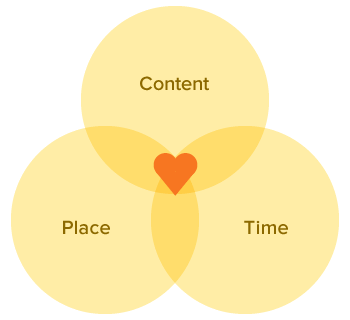
When they first started making cars, Sir Henry Royce, and his partner, Charles Rolls, would build them near Savile Row, the London street where the city's top tailors had their establishments. They would urge their customers to have their coaches finished with trimming to match favourite suits and gowns.
Source: http://www.hubspot.com/inbound-marketing

Management Learning: Whether at life or work, being in the right place at the right time, with the right product, increases the chances of successful outcomes to your endeavours.

14 May, 2015

Strategise and focus


In the French fighter jet Rafael,  the guns are so sensitively controlled,  that you can aim and fire the guns with just a turn of the head. This is so because being a fighter jet, the pilot needs to concentrate more on the fighting strategy than on flying the plane.

Leadership lesson: Once you have prioritised the actions your teams need to take, make the tasks around the key priorities simple to do and try to eliminate as many actions around the unrelated ones. 

13 May, 2015

Why Customer is King

ET Panache,  is a supplement which comes with the Economic Times. It calls itself an "Advertorial and Promotional feature," a polite way of saying  all news in the supplement will have to be paid for.  So in today's issue we have billionaire industrialist Yohan Poonawala complaining about his dissatisfaction with premium auto maker Porsche. His SUV caught fire and he is apparently unhappy about the way the company has handled the complaint. This is bad press for Porsche.

Now, whether Poonawala has paid for the news to be featured  as headline news, maybe pure speculation, but what made him vent his ire in this manner? He says he contacted the India director the morning after the accident, who told him he will revert within 48 hours with a solution. Next,  says Poonawala,  he was informed that the director has left for a 'pre scheduled meeting' to Germany,  where he would bring up the issue. An anonymous source has told the paper that it takes a minimum of two weeks to address an issue like this,  and that an investigator is  his way down from Germany.

So where did the India director go wrong in dealing with Poonawala? Considering he is a car aficionado and a billionaire to boot, should the director have been in constant personal touch with him? Should be have offered Poonawala another car as a temporary replacement?

There are several possibilities here,  but only one lesson in customer relationship management -  do not take your customers lightly. They have any number of forums, paid, and free, to vent their spleen on you. 

And that can have serious consequences for your company's image.

07 April, 2015

Setting right priorities


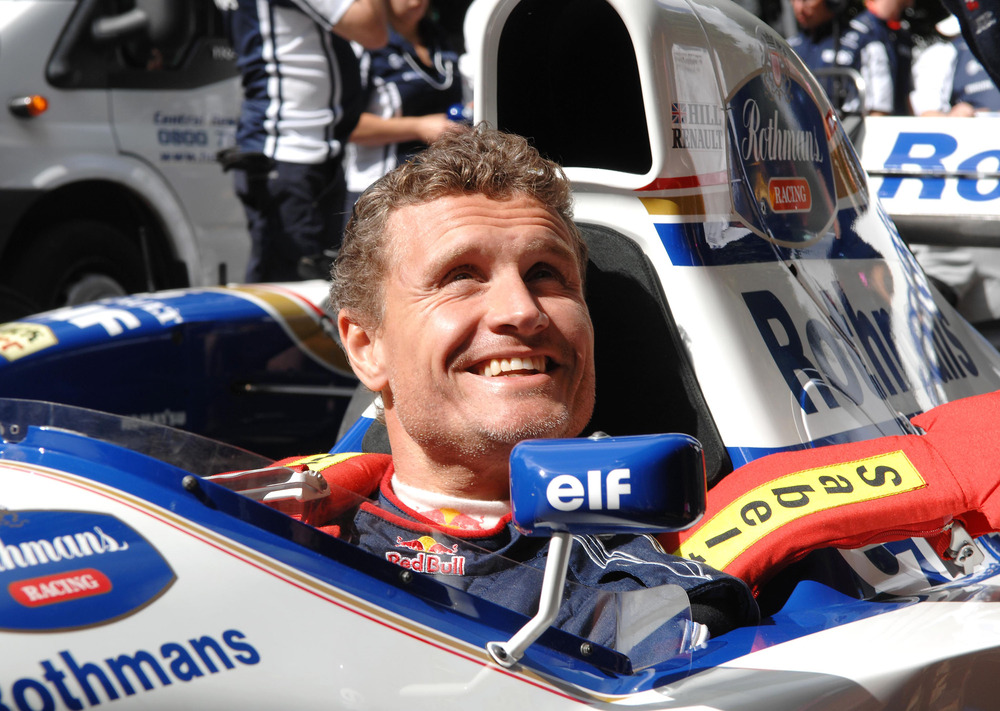
Former F1 racer David Coulthard says the cost of a present day racing car engine has gone up from £5 million to £20 million. The race for new technologies and the sky rocketing costs are putting pressure on the smaller companies. So much so that just 15 of all the cars in the Australian Grand Prix started the race, something is wrong, says Coulthard, when all the cars in the fray cannot start a race. He goes on to makes an important point, when he cautions that we should not get so caught up in showing off technology, that we forget that there are people in the grandstand who want to see a motor race.


The learning point in this situation? The critical need for leaders to be clear on;
1. what they are in the business of
2. what they are in business for, and
3. what their customer needs are
Then set their business priorities accordingly.

06 April, 2015

Lessons for work and life 1

Schmitten,  a new brand of premium luxury chocolates by a Surat based manufacturer seems to have it all,  beginning with a premium sounding name. It is setting up experience-cum-retail lounges in 50 cities to promote the chocolates.  It's first set of launch commercials have been made by Swedish ad maker Frederick Bond. The brand will be backed by a 70cr ad campaign and aggressive retail expansion.  It has roped in adman Prasoon Joshi and Bollywood actress Priyanka Chopra to promote the chocolates and It has set up a 450cr manufacturing unit near Mumbai.

Wow, you say? Well,  hold it, because according to Harish Bijoor, the marketing guru,  the  chocolates have one major flaw;  the brand suffers from a packaging issue.  It does not reflect the premium status it is aspiring to build through its advertising.  It is important for a brand that aspires to be seen as premium or luxury,  to connote those values through their packaging as well says Bijoor.
Life lesson: in a competitive world,  you have to package yourself right - reflect the values you represent in your communication, your attire, in short your very persona.  Sounds sordid when put like that? Gandhiji put it in a more palatable way - be the change you like others to be.

04 January, 2015

How to remove the garbage from your mind

"To compose, I need to be happy and to have free mind space."
                                                        - A.R. Rahman Music composer


One of the secrets to our wellbeing, says blogger Philipp, is to find the balance between being and doing . To be ourselves, he says,  is to connect to the things that make us happy, and to achieve the happy state, we need to learn to simply be. Cleaning out a busy schedule or taking a long vacation will help, but ultimately we will need to find the being in the doing.

Read Phillip's interesting, take on how to be happy.

http://balancedaction.me/2013/02/13/finding-the-being-in-the-doing/

02 April, 2014

Success is Failures Learned Well

The wisdom of learning from failure is indisputable. Yet organizations that do it well are extraordinarily rare. This gap is not due to a lack of commitment to learning, says Amy Edmondson in her article in the Harvard Business Review. Managers in the vast majority of enterprises that she has studied over the past 20 years genuinely wanted to help their organizations learn from failures to improve future performance. The common feeling in most organizations is that failure is bad. This leads to the fear of telling the truth, which in turn, can get in the way of learning from past mistakes. The unfortunate consequence is that many failures go unreported and their lessons are lost. A story from the book The Leader, the Teacher and You, by former top Singapore civil servant Lim Siong Guan, serves to illustrate the point well.
When People are Afraid of Telling the Truth
The Singapore Ministry of Defence once decided that the SAF (Singapore Armed Forces) camps should plant papaya trees to enhance the use of land and provide an additional source of nutrition for the troops. As with any initiative, Key Performance Indicators (KPIs) were established.
Not all camps were successful despite their best efforts, because some terrains would not yield healthy papaya trees. However, rather than declare their failure, a few units took to buying papayas and papaya trees to keep up with their regular reports of the KPIs. The experiment was finally abandoned when it was plain that some units had perpetually young papaya trees!
'The experiment," writes Lim in his book, "was a lesson in how honesty and integrity can so easily be undermined” when people are afraid of telling the truth. “The opportunity to learn and correct poor ideas in good time was missed.”
In her HBR article, Strategies to Learn from FailureAmy Edmondson, observes that in most companies, the attitudes and activities required to effectively detect and analyze failures are in short supply , and the need for context-specific learning strategies is under appreciated. Organization, she says, need new and better ways to go beyond lessons that are superficial (“Procedures weren't followed”) or self-serving (“The market just wasn't ready for our great new product”). That means jettisoning old cultural beliefs and stereotypical notions of success and embracing failure’s lessons. She proposes an excellent structured process to review failure and learn lessons from it.
Call to Action
Freedom to make mistakes and learning lessons from it are vital to an organization's success. Allow room for failure, and set up a process to review lessons learnt from it. The scale Praiseworthy to Blameworthy in Edmondson’s article, represents the spectrum of reasons for failure in a scalar form. It can prove an excellent tool to flag-off and institute a process to review failures within an organization. You could use it too!

Pause. Think. Go.

Flash back It was several years ago that I met him on a Bombay Walk - the ones where they take you around to see and learn about the colonia...