02 September, 2011

The Art of Sensitive Change Management


In a recent interview with the Economic Times, Management Guru Ram Charan explained the importance of why top leaders need to be involved in bringing about transformational change in organizations.

Most companies manage incremental change but it is the transformational change that’s difficult. Any major change almost always requires a significant change in internal culture. That means some of the key decisions will be made differently. Resource allocation will change. Some of the things the company used to do when they were successful will need to be ditched. All this, says Charan, makes it imperative that the top people be hands on for driving change.

But, managing change can be a challenging task for top leaders. For the change initiative to be successful, it is important that employees be ready, willing and able to adapt, and be flexible to these changes. However, any major change initiative carried out in organizations can cause an imbalance in the work environment. People find themselves caught between the old and the new with one foot firmly planted in old familiar ways, and the other teetering in the new environment they find themselves in. It is human nature to want to feel a sense of balance and therefore, it is important that top leaders manage their change initiatives with sensitivity. A fast roll out of several initiatives together tends to reinforce the sense of imbalance and may lead to disaster. It is therefore extremely important that the change program be handled in a sensitive manner. Since, each of us responds to change in different ways, knowing the nature of the response of their employees, top leaders can evaluate and make the necessary course corrections in the change initiatives. 

But how is the top leader to know his employees’ responses? Author Mary Frances-Winters suggest a way.

All of us are different. Some are extroverts, others introverts. Some are quick starts, others fact-finders. Some are liberals, others conservatives. All of us, says Winters, have natural ways in which we respond to conflict—natural ways in which we each respond to change. Understanding the natural way of how people handle change can therefore be important for top leaders in managing change sensitively. Winter’s formulation of the six “types” of employee reactions to the changing workplace is a useful tool to enable this understanding.

  1. The Foggies: Oblivious to the changes all around them.
  2. The Fakers: Tell themselves and others that they are on board with change but make no personal changes to their behaviour
  3. The Faultless: They see the changes around them, do not like them, and constantly complain.  They see themselves as hopeless victims of an unfair system.                  
  4. The Fearful: Fear is a natural response to uncertainty.  Fearful people engage in self-protectionist, non-team-oriented behaviour.  There is low trust and oftentimes paranoia sets in.
  5. The Fighters: There are two types of fighters. One who rejects change and ardently promotes a status quo position. The second type of fighter wants change and feels frustrated by the lack of progress.  They are vanguards, often seen as troublemakers by those who fear change.
  6. The Futurists: These are individuals accustomed to change, and/or highly self-differentiated, or workers new to the culture.  They are adaptable, flexible, and global in their thinking.  They know that they are in control of their destiny.  They are career-resilient
 Winter’s formulation of the six responses is meant to facilitate employees to discover for themselves, their ability to find peace in the workplace. However, I believe, there is yet another important role the formulation can play.

Using the Six Fs Tool as a Change Sensitivity Monitor

I see Winters’ formulation serving as a tool for top leaders to understand the impact of their change programme on their employees. They can do this by categorizing their own perception of the responses to the change of each individual employee into the six types. By involving other key decision makers in the process, top leaders can eliminate their subjective bias in the categorization. The results of the combined exercise should enable a deeper understanding of the impact of the change programme on the employees. More importantly, it can help top leaders to examine the impact of change on individual employees, rather than holding a homogenous and amorphous view of the impact. The individual understanding can be used by top leaders to deal appropriately with each response; either in a one-on-one, or by appointing internal (or external) coaches for the deserving ones. The next step is to use this understanding to regulate and monitor the speed of change, and formulate strategies to bring everybody on board.  

And manage change sensitively.


21 August, 2011

Move Over Visioning. Enter the Future Story

Jeremy King is an English restaurateur whose interview with Vir Sanghvi appeared in a recent issue of Brunch. Asked what his principles for starting a new hotel were, Jeremy made a point which appeared to be of particular interest to me for my Visioning workshops which I conduct as a strategic coach. This was about how every hotel must have a back story. 

A back story is an essentially cinematic concept. What it means is that the events you see on screen have a background, a story that explains their provenance, even if we don't have to confront that back story in the actual plot. An example is the story actor Michael Caine created around his role as the butler in the Batman series. He fleshed out a story about how Alfred the butler was a former British commando who took up to cooking on difficult postings and who went to work for Thomas Wayne (Batman's civilian avatar) when he retired. This story helped Caine to not only understand Bruce Wayne's motivations, but also to understand Batman's world of violence. Moreover with his commando background, the butler could actually help Batman in his fight against crime. All this Caine made up because he reckoned nothing made sense with out a back story. 

Jeremy applied the same principle to the new hotel he is opening in London's Oxford Street. According to the story,  the hotel was built in the 1920s by a rich American who loved London. It was the toast of the town, Then as the American owner went back to the States and the hotel fell on bad times and was sold to a modern chain which destroyed its character and now King and his partner are renovating it to recover its lost lustre. None of this of course is true, so why bother? Because, says King, it gives the new owners, the architect, the designer, the management and the staff an idea of what the hotel should be. They don't just say, "Let's convert this office block into a hotel." They say, "What would the hotel have looked like at its peak in the 1920's?"And while designing the rooms, they ask themselves, "What would a luxury hotel built in the Jazz Age have offered to its guests?" The back story serves as reference point for everybody in the same way that Alfred's back story told Michael Caine how Alfred would react to any situation. According to King unless a hotel had a convincing back story, it failed in the long run.

Source: Philantopic
Source: Vision Ohio
 And this brings me to the connection between the back story and the 'future story' people can create for their companies. Just like a well-thought-out and crafted back story serves as a reference point for everyone involved with the project of building or renovating a hotel, a carefully crafted future story can serve as a fleshed out story of future success in companies. The individual stories help people to understand the dreams and concerns of their colleagues, and the stories lead to significant themes around which an energizing  and motivating picture of the future can be painted. The resulting one story, embodying critical themes from all the stories, helps to create an irresistible pull which acts like a compass, a battery pack, and a talking map all in one.

So instead of making people rack their brains and go thorough an exhausting day(s?) of a  Visioning exercise, move to the Future Story, it will enable your people to:

  • make up stories, plausible or fantastic, to paint the future
  • understand organizational issues better because they are presented in the form of a story
  • sort out and describe what has happened to oneself or others, often with a richness of context and detail, and often with great relish
  • envision chains and webs of causation
  • build scenarios and to plan and think strategically
  • resonate with the stories of others; to see another's viewpoint when presented with the stories which underlie or embody that viewpoint
  • to discover themes in the events of the story
  • to recognize (or select) certain elements as significant, as embodying certain meanings and to draft a road map of the future
And finally, don't forget to tell your people to give their stories a touch of the cinematic. The  gloss, and shine will illuminate the future everyone can look forward to.

To make it a shining beacon to the future.

References:
  1.  http://www.co-intelligence.org/I-powerofstory.html


15 August, 2011

Decoding the Desi Dynamic

With more and more Indian executives being posted abroad - especially in booming sectors such as IT, Pharma and FMCG, Indian companies have felt an increasing need for the chosen people to be trained in the culture and the ways of the country of posting. This has meant the rise of a new breed of trainers in culture and special classes for country specific culture training to help such executives fit smoothly into their new roles.

But have we ever stopped to think about the Indian manager who is about to take up a position outside his native state? Have we ever thought of the need for training such individuals to quickly settle down into their new roles they are about to take up? Why do I say this? Hear what some expat CEOs have to say. Kwon of Samsung believes serving in India is like serving in many countries. Michael Bonham, who is the Ford India CEO supports this view. When he shifted to Delhi after spending nearly three years in Chennai, he actually thought he had shifted to a "different country."  So how does one go about learning about these countries within a country and our cultural traits and attitudes?  How does one go about decoding what the Economic Times calls the desi dynamic? Learn from the experiences of expat CEOs posted on Indian shores. Why? Because they notice things which we as Indians don't and they put a light on attitudes which we take for granted.

For many of us our attitudes and beliefs about different communities are the cultural stereotypes handed down to us from our parents and friends, (the Bong is sentimental, the North Indian is aggressive etc). And these become the drivers influencing our behavior and responses to people from these communities which can come in the growth path of executives who aspire for leadership roles. For, as Jacques Challes the Managing Director of L'Oreal puts it, "India is about the future of business." Moreover Challes believes that in India "you are constantly building" unlike his own country France, where everything is static. Since the business of business is primarily about managing people, and the Indian environment is one of constant change, where do we begin? With one of Challes observations.

Challes has observed that the power distance between the field staff and the highly educated managers at headquarters, is so big, that they are not able to communicate effectively. The loss in translation is the reason why strategies created at the top are often not executed efficiently in the field.

The Indian manager has a unique set of attitudes, knowing which, can help us grow quickly in our leadership roles

So how can managers cut this loss in translation? How can s/he improve execution of his or her painstakingly planned strategies? The learning about the desi dynamic of the expat CEO trying to settle down into his leadership role in India, holds important lessons for us. 

Yves Martinez of Legrand has discovered that its not enough to set targets and issue instructions to his managers you have to take time to convince the internal teams. "...people want to understand what they are doing, they want to take time over it." 

Benoit Lecuyer, the MD of Hager Electro believes that management in India is more personal and therefore managers have to make people the centrepiece of business and life. Instead of calling large meetings with 50 people, they should call the managers for one-to-one discussions. This  helps the manager and his senior to get to know one another better.

Kiminobu Tokuyama CEO of Nissan Motors seconds this view when he observes that Indian managers are rich with ideas and views but in business meetings, they do not express any disagreement with their bosses. "My constant effort," he says. " is to create an atmosphere of mutual respect, trust, confidence and fearlessness and thereby enable free flow of honest opinion from all."

A very important insight comes from Neil Mills, CEO of Spicejet. He calls for dealing with people as individuals and not as members of a community. He believes that there is no such thing as a common Indian culture, for instance, a person with a south Indian name could be more north Indian, because he has lived in Delhi all his life. This means one has to tailor the way instructions are given to people based on their divergent backgrounds and not as a Marwari, Tamilian, Bengali etc.

So there you have it - the desi dynamic decoded. Now to set about internalizing and validating the observations in our corporate lives and leadership roles.

11 August, 2011

Strategic Planning in Volatile Times

Growth takes place whenever a challenge evokes a successful response, that in turn, evokes a further and different challenge. 
                                     - Arnold J. Toynbee

Long-range planning is usually considered to assume present knowledge about future conditions. It looks to make certain the plan's exact results over the period of its implementation.

Strategic planning, however, assumes that am organization must be quick to respond to a dynamic, changing environment, which may require changes in the future. And in today's volatile world, this ability is being sorely tested. 
Volatile times require new ideas and approaches to growth planning
With opportunities coming faster and disappearing even faster, decision making and flexibility becomes critical. Any response which is not nimble and flexible enough, can spell disaster for companies. Five year plans are therefore history, and one year plans are in - and even these need to be monitored on a weekly basis. The Economic Times in a recent article, decribed how various companies have adapted themselves to the times:
  1. The Godrej Group has streamlined the strategy planning process to such an extent that the quarterly planning meetings which used to last nine hours, have shrunk to three.
  2. At Cognizant the strategic planning team would meet a couple of times year to make sure things were on track, which turned to monthly meetings during the recession. With things having settled down a bit, they now meet every quarter, but with far more awareness about what is going on in the business.
  3. At Marico, they realized that with the shrinking cycle time, the planning and budgeting cycles tended to get merged and it was therefore important to clarify the sanctity attached to the planning horizon. They have attempted to separate the two religously. 
  4. At Bharati AXA GI the five year plan is redrawn every two years.
  5. At Accenture, while the long-term directional view stays, the short-term tactics are tweaked constantly.
However, while most companies have seen planning cycles shrink, at software firm Persisitent, the reverse is true. The process now involves a bigger base of people discussing how the technlogy landscape is changing and a strategic response in the execution of things.

The trick, in these volatile times then lies in finding a balance between the short and long-term objectives and strategy. As S. Ramesh, President Finace and Planning of Lupin puts it." Often market-beating strategies see rapid failure without a solid implementation plan." Assessing how the strategy positions the company, the level of insight it rests on and therefore the kind of implementation it calls for, takes on critical importance.

Are you keeping up with the changing times? Even if you are, a Business  coach who specialises in leadership and strategy can support you in navigating and negotiating the turbulent times even better! For more details see the About Me page on this blog.


.

09 August, 2011

Master Strategist Mahatma Gandhi


 Gandhiji on the Salt March


Eighty-one years ago, in the month of March Mahatma Gandhi began his Dandi March, an excellent case study of the meticulous thinking, conviction, thinking and planning that need to go into the making of a great strategic plan. What makes the Dandi March so, is Gandhiji’s synthesis of  the ‘method of action’ and the ‘method of enquiry’ involved in the process of arriving at salt as an evocative symbol of the campaign.
His activities were never fragmented in their approach and style, Satyagraha was an important component of his actions but it was not the only act. It was Gandhiji’s  ability to discover and make strands of  interacting relationships and engagements of various streams of public life and politics as a part of his strategy, which mark him out as a master strategist. An example of this is in the manner he planned the form the Dandi campaign should take, the length of the march, and the sea-side town where the protest would be staged.  Let us examine Gandhiji’s approach to strategy and its individual elements in greater detail.


Salt as a symbol
For the campaign, Gandhiji wanted a symbol, which was universal; something the poor peasant could understand and identify with. He therefore chose salt and the breaking of unjust British salt laws as the focus of his strategy. Though this choice had its share of sceptics, Gandhiji had sound reasons for his decision. The choice of the salt tax was a deeply symbolic since salt was used by nearly everyone in India. Being a tropical country, sweating necessitated greater intake of salt and such an item of daily use could resonate more with all classes of citizens than an abstract demand for greater political rights. Moreover, the Salt tax represented 8.2% of the British Raj tax revenue, and hurt the poorest Indians the most significantly. Explaining his choice, Gandhi said, “Next to air and water, salt is perhaps the greatest necessity of life.” Rajaji - the shrewdest of Congress leaders, termed the choice was not salt, but disobedience which was to be manufactured.

The Form of the Campaign

Having finalised salt as the focus, Gandhiji decided on the march, as the form the campaign would take. The march in Gandhiji's mind was linked to the idea of a pilgrimage. Dandi fitted this imagery not as any association with a holy site but because getting there would be a hard 26 day trek and a tough test of physical endurance and will-power - a reflection of the marchers resolve.
The Length of the March
The length of the march - a gruelling 390 km, was important for several reasons: it would be taxing in the extreme, and that would bring about a wave of sympathy and support throughout the country. The period would also help in the build-up of publicity, remember this was in the days before the 24/7 media coverage we have now, which can blow up a minor incident into a nation-wide concern. And how brilliant this element of his strategy was, can be gauged from the fact that when the March began, American journalists had come in large numbers to jeer. A whole lot of them stayed on to cheer and alter American opinion, especially about Satyagraha.

Success of the Dandi Strategy
Gandhiji’s meticulous planning resulted in the overwhelming success of his strategy for the Dandi March and marked the launch of a world changing philosophy. Satyagraha, until then was seen as a theoretical construct of Gandhi's writings but after the worldwide publicity and interest the march evoked, it came to be seen as a philosophy that could actually change the world. The March to Dandi planted the seeds of August 15, 1947, and later for what Martin Luther King and Nelson Mandela achieved.
And what future generations might achieve all over the world.

06 August, 2011

Finding the Golden Mean(ing) of Life

Mount Kailash, The Abode of Shiva
In Hindu mythology there are are two types of heaven: heaven (spelt without capitals) and Heaven (spelt with capitals). The smaller heaven is called paradise, to distinguish it from Heaven. The first heaven, or Paradise is called Swarga and is ruled by Indra, king of the gods (note the spelling without capitals). He is surrounded by wealth and beauty and fame, but he is always insecure, fearful that another king or sage or demon may topple him anytime. Heaven, Vaikuntha of Vishnu or Kailas of Shiva, where there is no threat, only eternal peace. In the case of paradise, there is prosperity but no peace, while in Heaven, there is peace but complete indifference to prosperity.

The eternal duvidha or dilemma each of us face in our time on earth, is finding the right balance between prosperity (Swarga) and peace (Kailas). Do we choose a life of prosperity and give peace a go by, or do we choose peace and be indifferent to prosperity? A difficult choice, especially in these days of  increasing social and peer pressures to seek material prosperity. How does one navigate this dilemma? Here's one way to do it.

Finding the Golden Mean(ing)of Your Life
According to Hindu philosophy, the Four Purusharthas or Goals of life are; Dharma (Values), Artha (Prosperity), Kama (Sensual pleasures) and Moksha (Emotional balance). Stephen Covey, after a study of different religious traditions, came to the conclusion that the Four Needs of life are to  Live, Love, Learn and Leave a Legacy. It is in our yearning to fulfill our Goals that we end up confused and frustrated, for often one comes at the price of the other.  

To render this balancing act a little more doable you could use the Golden Mean Matrix (GMM). The GMM is a 2x2 matrix which has Prosperity on one axis and Peace on the other.


 To arrive at your Golden Mean, you need to closely analyse your perspectives on Peace and Prosperity by asking yourself the following questions:
  1. What do I stand for?
  2. What Values and Principles are close to my heart, are sacred to me, and are rooted deeply in my life?
  3. How do I create meaning in my life and see to it that everything is not about earning money?
  4. To what extent is material wealth important to me?
  5. Where do I want to go?
  6. What do I want to become? In the broadest sense, what do I want to achieve in my life? What do I live for?
  7. How do I want to know myself and be known to others?
  8. If I die, what legacy would I like to leave behind, and what would I like to have meant to others?
  9. What do I want to learn? What do I very much like to do? What do I think is very important? What do I find nice and attractive? What makes me happy or sad? What am I willing to sacrifice to realize my objectives? What do I really want?
  10. What do I want to invest in life and what do I want to gain from it?
After having reflected on and answered the above questions, you should be ready to arrive at your Golden Mean(ing) of Life. Give yourself a score between 1(Low) and 10 (High) for the two factors; Peace and Prosperity and plot them on the matrix above. The point of intersection of the lines will tell you what you yearn for, what the Golden Mean(ing) of your life is.

Scores 
Peace                              Prosperity                           GMM
High, Bet. 5-10                High, Bet. 5-10                    Moksha
High, Bet. 5-10                Low, Bet 1-5                       Kailas
Low, Bet. 1-5                  High, Bet. 5-10                    Swarg
Low, Bet. 1-5                  Low, Bet. 1-5                      Pataal
                                                                                                      
* Pataal:  The subterranean world of Asuras and serpents. The Indian version of hell is not a permanent place of exile, one may rise and reach Kailash after having duly paid for one's bad karma.


References:
  1. Myth=Mithya, Devdutt Pattanaik
  2. Total performance Scorecard, Dr. Hubert K. Rampersad

30 July, 2011

A Note to Ms Kalpana Morparia@JP Morgan

"...there was certain comfort in walking across to your boss and talking to him - that always helps in making decisions. As a CEO, I can reach out to my colleagues, but otherwise I am pretty much on my own." That was Kalpana Morparia, the top gun at the Indian arm of JP Morgan, talking to the Economic Times about the change she experienced when she moved up from her earlier position as the Joint MD at ICICI bank.

Most leaders experience a range of emotions on any given day - anxiety loneliness, frustration, grandiosity and for dealing with it, as Ms Morparia describes, they are pretty much on their own. At such times, what senior executives need is a sounding board, a conversation partner a 'truth speaker' - and they cannot find any of these within their organizations.

And that is where a coach comes in.


The coach isn't tied to the organization or anyone else, they are tied only to the coachees, so  they support them in these times. Even more importantly, the coach also supports them in what they want and where they want to go. As Washington, D.C.-based executive coach Linda Finkle put it, "Even our families, who want the best for us, can't be unbiased or totally objective. What you do or do not do impacts them, whether it's positive or negative. A coach is not impacted by your decisions, your wins or losses, or anything else."

This doesn't mean that company goals aren't supported by coaching—indeed, the coach was most likely hired by the company to support the executive's efforts to achieve those goals. Even so, the role of the coach is not to represent specific company needs or interests. "The perspectives they provide, the alternatives discussed, and everything else has no agenda except to support the coachee," says Finkle.


Ms Morparia, are you listening? Now that you do not have the comfort of walking over to Mr Kamath's cabin and talking to him to unburden yourself, would you care to have a coach?

You know whom to contact!

26 July, 2011

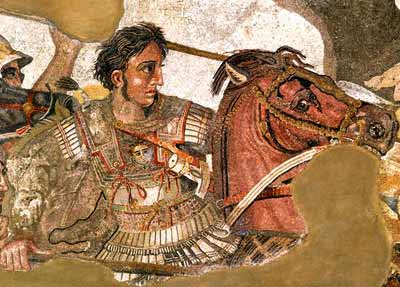
7 Leadership Lessons From Alexander The Great

Alexander became king when only 20 and in an amazing eleven-year journey of conquest rode 10,00 miles, fought 70 battles without losing a single one and conquered all the way from Egypt to India – half the known world of those times. All this in a life spanning a mere 32 years! Obviously an achievement of such epic proportions could not have happened without the display of some amazing leadership qualities. What leadership qualities of Alexander made historians label him 'Great'? Here are 7 incidents from the short life of Alexander, that are illustrative of his leadership style and which we could take lessons from.

Alexander the Great Source Encyclopedia Britannica


Leadership Lesson #1: Have An action orientation

Action was what Alexander wanted from life. He hated a life of comfortable sloth. When he heard of the conquests of his father, King Philip of Macedonia, Alexander was not happy about the additional wealth and power that he would inherit, but instead was sad that there would be less left for him to conquer. Alexander often lamented to his friends that the way things were going nothing would be left for him to do once he became king!


Leadership Lesson # 2: Care for your people

Between 30,000 and 43,000 infantry and between 3,000 and 4,000 horsemen followed Alexander into Asia Minor [334 B.C.]. He had only 70 talents (Greek currency) for their pay, and no more than thirty days' provisions. Alexander was 200 talents in debt, having spent everything he had in making sure that his best men were able to provide for their families. When one of his generals asked what he had kept for himself, Alexander answered: "My hope." On hearing this, the general refused the pension that Alexander offered him, saying: "Your soldiers will be your partners in that."


Lesson # 3: Be seen caring for your people

After covering four hundred miles in eleven days in the battle against King Darius, Alexander and his soldiers were nearly dead from thirst. Some Macedonian scouts had brought back a few bags of water from a distant river, and they offered Alexander a helmet-full. Although his mouth was so dry that he nearly was choking, he gave back the helmet with his thanks and explained: "There is not enough for everyone, and if I drink, the others will faint." When his men saw this, they spurred their horses forward and shouted for him to lead them. With such a king, they said, they would defy any hardships.


Leadership Lesson # 4: Dare to innovate!

In the city of Gordium, Alexander accepted the challenge of the Gordian knot. A very intricate knot tied together the yoke of an ancient chariot, and there was a legend that whoever could undo the knot would become the master of the world. Alexander pulled out his sword and chopped through the Gordian knot, instead of involving himself in its mysterious entanglements.


Lesson # 5: Lead by personal example

One day, Alexander fell behind the rest of his army because his old teacher, Lysimachus could not keep up. Night found Alexander in a very dangerous position: far behind his army and without any fire to combat the cold. He noticed some enemy campfires, so he ran over to one, killed two soldiers with his knife, then carried back a burning stick to his men. This was typical of Alexander -- he was always encouraging his men by a personal example of readiness to work and face danger.


Lesson # 6: Live your values

One night at Gaugamela, the armies of Alexander and Darius, King of Persia, came in sight of each other. The noise and campfires of the vast barbarian camp were so frightening that some of Alexander's generals advised a night attack because it would be too dangerous to take on such a huge force in daylight. But Alexander replied: "I will not steal victory."


Lesson # 7: Reward your people

Another time, one of the common soldiers was driving a mule that carried some of Alexander's treasure. The mule was too exhausted to go on, so the soldier put the load on his own shoulders. Alexander saw the man staggering along, and he asked what was the matter. The soldier told him that the mule was too tired to carry the load, and that he was about at the end of his endurance too. "Don't give up now," said Alexander, "but carry what you have there to the end of the journey, then take it to your own tent, to keep for yourself."


Parting Thought

These incidents offer us an understanding of why Alexander truly deserved the title of 'The Great'. But was his epic achievement a result only of his remarkable leadership skills and courage? In the words of a fellow Greek – Euripedes, 'Courage is nothing if the gods withhold their aid'. Can one say the same of leadership skills too?


Was Alexander truly a Leadership ka Sikander or was he a Muqqadar ka Sikander - the most favoured child of God?

20 July, 2011

The Difficulty of Being an Honest Business Leader

While coaching business leaders, one issue that comes up quite often is the battle of conscience, or, the battle of Ethics vs Morals. But first, let us understand the distinction between the two.
Ethics: Many many years ago, as Man moved from being a hunter forager to settling down in groups and communities, a need was felt of putting together a code of civilized living. The code was based  on notions of socially approved conduct, behaviour and duty. One could cite the Manu Smriti in India and the Ten Commandments of Christianity as examples of such codes of conduct.

Morals: As opposed to community -based ethics, morals are personal choices we make. It is about good vs bad, right versus wrong.

In sum, therefore, Ethics are community-defined whereas morals are more personal choices or inclinations.

The Battle of Conscience:
Doing business in India has unique challenges - and the problem faced by every single business leader is of dealing with the cancer of corruption. And this is where the battle of the conscience starts to rear it's head. This was evident at a recent workshop on Personal Mission and Values I was doing for  a group which included a few front-line executives. One of the activities required participants to identify their personal values and the importance of  identifying and living our values in our life. After my presentation one of them asked, "If the value of my time to my company is Rs 3000.00 per day, and I have an option to pay a tout Rs 1000.00 and get a ticket (or a form etc.) delivered at home instead of waiting in a queue to buy one, what should I choose to do?

And that's the battle of the conscience I am talking about - should the business executive/leader forgo his personal value (morals) of not paying a bribe  and settle for the 'efficient' and 'cost-effective' option of saving his time and pay a bribe? Or should he he stick to the ethical standards of conduct no matter what it costs?

 Fighting the Cancer of Corruption
Indian business leaders have learned to deal with this cancer in their own ways, and we can map them on a a matrix as follows:


The Upholders: Believe in going by their voice of conscience, whatever it takes. E.g. Narayana Murthy of Infosys, who resisted the temptation of greasing palms to get work done and yet came out a Winner.

The Wilters:  They do a trade off with their conscience as in the case of the participant above. They believe in the dictum, "If you can't beat 'em, join 'em!"

The Tainted: These are the ones who thrive in a corrupt system. They are deaf to their voice of conscience and milk the system for all it's worth.

The Contaminators: These people with low morals, in the pursuit of their own interests, contaminate an uncorrupted system. An example is that of the pharma industry, which in trying to get doctors to prescribe their products, resorted to gifting them all kinds of fancy things from cars to jewellery. The previously noble profession has very few now who abide by the Hippocratic oath. The  industry now cribs about the increasingly fanciful demands of doctors, but they themselves are to blame.

In Conclusion
Every business leader doing business in India, has to take a call and do peace with his conscience in his own way. Some fight successfully, some succumb, many thrive while a few corrode the system.

Each does battle with  his conscience in his own way.


18 July, 2011

Is Your Organization Future Ready?


One of the foundations of business improvement strategies is to align business activity against organizational objectives, customer requirement and business strategy. However, very often, this alignment does not exist and the reason? The teams do not know what the organizational goals and objectives are! 

Evan Apfelbaum, of the Kellog School of Management, once asked a a group at a top American consulting firm what the goal of the team was. He got eight different answers! Which was exactly my experience with the findings of a survey I carried out recently. The survey, conducted on a client’s key executives, was to gauge the organization’s ability to focus on and execute their most important goals. One of the questions in the questionnaire was, “If you know any of the top three goals of your organization, please list them..” To this, 22% said they did not know the top three goals, The rest responded as follows:
 
Goal #1
1.      It should be system driven
2.      Be the biggest ....supplier in India
3.      Number 1 in world.....
4.      Achievement of target set by..... for year
5.      Sound customer base
6.      To be #1 and capture 80-90%.... market in India
7.      Brand image

Goal #2
1.      Individual responsibility for ...  success
2.      Educate the customers
3.      Customer satisfaction through technical assistance
4.      Best customer service
5.      Sales target

Goal #3
  1. No compromise on quality product
  2. Stand with the competitors with good profit margins
  3. Fastest and profitable subsidiary of .... India
  4. Collection
This diversity of  views on the goals of the organization is one of the most common occurrences in teams that don’t perform well – if people are not focussed on that one common goal, it becomes difficult to achieve the purpose that it has been assembled for.
According to Locke and Latham, clear common goals affect individual performance through four mechanisms. First, the goals direct action and effort toward goal-related activities and away from unrelated activities. Second, they energize employees. Challenging goals lead to higher employee effort than easy goals. Third, goals affect persistence. Employees exert more effort to achieve high goals. Fourth, goals motivate employees to use their existing knowledge to attain a goal or to acquire the knowledge needed to do so.

In the case of this particular client, as a first step to bring about alignment in business activity, we recommended and executed a Visioning workshop, along with some more initiatives based on other findings of the survey.

Clear common goals that everyone understands, are critical to every organizations business success. They provide organizations with a blueprint that determines a course of action and aids them in preparing for future changes.

Is your organization future ready?


12 July, 2011

The Essential Element of Leadership

For an organization to succeed, it is vital for teams to have clarity of direction. Three elements which can help establish a clear direction for any team are:
- A Team Mission Statement
- A Team Vision Statement
- Team Values
Most organizations who conduct workshops for defining the three elements would do well to remember the words of Charles Schwab, the former CEO of a brokerage house. He used to say that people will work hard for money, but will give their lives for meaning. And the most powerful way of giving meaning to people's lives is by helping teams to define their Personal Mission, Vision and Values, BEFORE they do so for the organization. This will have a powerful impact on the employees engagement with the entire process of defining, as well as the practice of the values. Apart from making their individual lives more meaningful, this sequence of workshops helps in two ways;
  1.  the understanding of the importance of values in their personal lives renders the task of defining the organizational values (challenging at best), much easier.
  2. it helps individuals draw a line-of-sight between the personal and the organizational mission and values
Living the Vision
The task accomplished, the leader has to embark on what Tom Peters calls "the essential element of leadership" - living the vision vigorously and practicing the values diligently. To do this, he needs to ensure open and continuous channels of communication with his employees. This constant contact will help the business leader to support his teams to live the defined vision, practice the values and to shape the culture and the way that things get done. Here are some way of doing it:
  1. Keep leaders, managers, HR staff and others engaged in the process through conference calls, email bulletinsand online forums
  2. Create an intranet page focused on the implementation and practice of the three elements where you can put a list of FAQ's as well as experiences of the people with the new practices
  3. Maintain focus on monitoring and course correction. Provide channels for feedback and ideas. Document questions and issues and share responses in different media.

Keeping at it
Once the mission-vision and values are sufficiently integrated into the system, its no time to stop. For, to quote Robert Levering, the co-founder of Great Places to Work Institute, "there is no such thing as 'too much communication". He cites examples of two CEO's who did it successfully:
  1. One of the values of Genentech, a biotech company was   'open communication'. The CEO did an extraordinary job of being transparent. Any question asked over email, would be responded to within 48 hours.
  2. Medtronic, a medical devices company has an event where actual patients come and talk about how their lives have been saved by Medtronic heart devices. This way, employees can see how people's lives have been saved. During the session, says Levering, there's not a dry eye in the house.
 Can you think of similar creative ways of living your values and connecting your organization's vision to it's impact on your customers?  Doing so should pay you rich dividends.

08 July, 2011

An Attitude to Up the Bottomline

"Sir, I cannot change the behavior of others, but I can change mine." This statement came from Navneesh, a young dynamic sales executive of a high performance metals company.

It happened at a group coaching workshop I was conducting  for the key executives from sales, marketing HR and logistics functions. As one of the activities of the day, I had the participants review their experiences of the past 15 days of their service delivery  interactions with internal customers. These were to be in areas of Coordination, Cooperation and Collaboration, examples of each which were provided,such as;
Coordination: Reduce the need for others to require clarification resulting from unclear communication

Cooperation: Accept feedback from others without being defensive

Collaboration:  Follow up all agreements in writing with customer within two days of oral agreement.

At the end of this review, the participants were to map their feelings about each of these interactions on the Emotigraph. This was a graph with Interaction event on the X-axis and Feelings about the interactions on the Y-axis, which was on a scale of 1-5; where 1=Unpleasant and 5=Very pleasant. The exercise completed, I asked the participants, "Having done the exercise, how many of you felt in the interactions reviewed, that you were right  and the others wrong?

I mapped their feedback on a scale  of 1-10, and the responses stacked up as follows:
90% put themselves between 1 (they were right) and 5 (maybe the other party was right). But Navneesh's response floored me, he placed himself at 10 (the opposite party was right!). When I asked him to explain, his reply was an astounding, "Sir, I cannot change the behavior of others, but I can change mine, and therefore, I always believe the other party is right." One would imagine that this is a wimpish or defensive strategy guaranteed to lose every argument. But one couldn't be more wrong. In point of fact, an attitude such as Navneesh's can help to quickly gain trust and resolve conflicts. The attitude has helped him be a person with with a high degree of a positive 'can do' attitude and one of the highest sales achievers in his team. Where does an attitude such as Navneesh's stem from? It comes from the practice of what Stephen Covey in his 7 Habits of Highly Effective People describes as, Seeking First to Understand and then Be Understood. The practice of this habit can lead to rich dividends. It can help employees within organizations to  seek common ground with a colleague and a way to move forward together.

Dr Xavier Amadorin in his book  I am Right You Are Wrong, Now What? Has a more detailed process for the practice of the 5th Habit which he calls LEAP (Listen-Empathize-Agree-Partner) process,  With the use of the LEAP process and strategy, employees can;
  • stop trying to force their colleagues to say they are wrong 
  • begin to listen in a new way that immediately lowers their own anger and defensiveness, 
  • convey genuine understanding, empathy, and respect for the others point of view, even when they disagree with it. 
On the other hand, what happens in organizations where a majority of employees in inter-company service delivery interactions take the stand, "I'm right, you're wrong?" It can lead to frustrating, circular  arguments and situations that stall progress and hurt relationships.

The result? Dissatisfied customers and ultimately - an unhealthy impact on the bottomline.


01 July, 2011

Dear Wannabe CEO

Dear Wannabe CEO,
The Wikipedia defines Young Turks as, "groups or individuals inside an organization who are progressive and seek prominence and power." Does this description fit you? If it does, then, I am sure you would have noticed the exciting headline in the Economic Times (30th June 2011) which said, " Young CEOs Add More Zip to Companies than the Old! The report quotes the findings of a study of BSE 100 companies which show that CEOs under 50 (the young category) added an average of 26.43% value to their companies as against the old guard (over 55) whose value addition was only 4.34%.  Now you will notice that the young category in this case stretches up to age 50, but I am guessing you as a young (and I mean young) aspiring executive with fire in your belly, fierce ambition and sharp focus are under 30. If you are, then  please read on.
As a member of the old guard, my experience tells me, that as a part of your preparation for the leadership game, you need to gain clarity about a few key factors. Two things to begin with;
  • Your Values and Beliefs
  • Your Risk-Benefit Quotient 
Sorry to sound patronising, but since many of your tribe rarely make time for self-reflection, I propose the following simple start to your journey.

STEP 1: Take stock of your Values and Beliefs by identifying your school of leadership:  
The clearer you are about what you value and believe in, the happier and more effective you will be.

Values are about how we have learnt to think things ought to be or people ought to behave, especially in terms of qualities such as honesty, integrity and openness.

Beliefs are generalizations that people use to give themselves a sense of certainty and a basis for decision-making in an uncertain and ambiguous world.

Adapting the work of G. Richard Shell, author of Bargaining for Advantage in the context of business, leaders can belong to three schools of leadership:

1. The Poker School - "It's a Game"
To poker players, business is a game and anything that can be done to gain advantage within the rules of the game (generally speaking, the laws of the land), is fair and just.

E.g. The Ambanis


2. The Idealist School - "Do the right thing, even if it hurts."
To the idealist, there is no separation between business and life. If you would not lie to your loved ones, you do not lie to your clients. If it's OK to tell a "white lie" to protect the feelings of a friend or prevent a tragedy, it's OK to tell a "white lie" to protect a corporate ally or prevent a business tragedy. While two idealists may differ in the specific set of rules they live by, they share the rigidity of doing what they believe to be "right", even when it seems contrary to their business goals.

E.g. N. R. Narayana Murthy


3. The Pragmatist School - "What goes around comes around."
The behaviour of a pragmatist may be inseparable from that of an idealist, but the motivation is different. While the idealist tells the truth and treats people fairly because it's "the right thing to do", the pragmatist tells the truth and treats people fairly because they believe it is the most effective way of getting things done. However, they will not hesitate to use deception as a necessary tool in pursuing their aims. Because pragmatists value their reputation (being seen to be honest), they will tend towards "misleading" statements over outright lies.

E.g. Barrack Obama


To which school of leadership do you belong?


STEP 2: Assess your risk-benefit quotient

The JISC Infonet defines risk as: 'A future event (or series of events) with a probability of occurrence and the potential for a) loss or b) impact on objectives that can be either positive or negative.'


No decision can ever be completely free of risk, but you also have to weigh up the benefits. How good have you been at assessing the probability of risk vs. the benefits? Use the Risk Matrix below to assess six major decisions you have made in the past as below;
1.       Analyse each of the six decisions based on two parameters; Risk and Impact

2.       Enter the results of each finding by ticking the appropriate box in the matrix

3.       Enter your scores in the table below.

Zone
No. Of Decisions
Risk Type
Purple
Aggressive risk-taker
Orange
Balanced risk taker
Pink
Unjustified risk-taker
Yellow
Risk averse

 
This analysis should help you increase your awareness of your ability to assess risk vs. the attendant gains. Considering that different positions and profiles need different degree of risk taking ability, you can draw your own conclusions about your suitability for each.


Call to Action

You have assessed yourself for two important factors in your success as a leader; values and beliefs and risk type, but bear in mind these tools are only meant to heighten your awareness of the two. To be better prepared for the leadership game, you need to constantly work on analysing and evolving yourself as a leader, not only in these two areas but many others as well!

All the Best!

Your Well-wisher.


Uday Arur, Business coach

Pause. Think. Go.

Flash back It was several years ago that I met him on a Bombay Walk - the ones where they take you around to see and learn about the colonia...